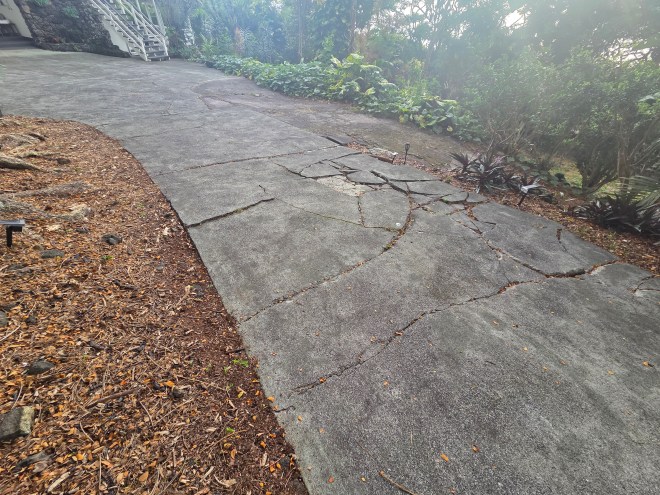
**Non-licensed independent contractors (the “concrete guy” operating on their own or as cash operators) are not legally allowed to place structural foundations in Hawaii.** This work almost always requires a state contractor’s license under HRS Chapter 444, plus a building permit from the local county (e.g., Honolulu Department of Planning and Permitting). Doing it without those is illegal and can lead to fines, stop-work orders, removal requirements, homeowner insurance claim denials, or even criminal penalties in serious cases.
Key Legal Requirements
– **Contractor license threshold**: Anyone who contracts to “construct, alter, repair… any building… or other structure” (including placing concrete foundations) for compensation must be licensed by the DCCA Contractors License Board unless a narrow exemption applies. Relevant classifications include:
-**C-31 (and its key subclass C-31a) is the specific Hawaii contractor classification for masonry and cement concrete work—including placing structural foundations.**
– ** C-31 – Masonry Contractor**: to lay brick and other baked clay products, rough or cast stone… CMU [concrete masonry units], … installation of grout, demo/rubble work, caulking, tuckpointing… **to place and finish cement concrete**; to drill, saw/cut, and core concrete; and to do epoxy injection in concrete for structural purposes.
– **C-31a Cement Concrete Contractor**: Covers mixing, placing, and finishing concrete (including forms/screeds for slabs, footings, etc.).
– **C-35 (Pile Driving, Pile and Caisson Drilling, and Foundation Contractor)**: For deeper/piled foundations.
– General **”B” (Building)** or **”A” (Engineering)** contractors automatically hold C-31a and can oversee this work.
– **Small project (“handyman”) exemption**: Currently ~$1,500 total (labor + materials + taxes + everything) for the entire job at one site. This does **not** apply if a building permit is required (which foundations will always need) or if it’s part of a larger project.
– **Building permit rule**: On Hawaii (and similarly on other islands), permits are required for any structural concrete work that supports a building, encloses space, or alters load-bearing elements. Simple non-structural flatwork (e.g., small walkways or patios) may sometimes skip a permit if under size/height limits and non-structural, but house/garage/addition foundations permits are required.
– **Owner-builder exception**: Homeowners can register as owner-builders, pull their own permit, and do (or directly supervise) the work themselves without a contractor license. They can hire wage employees/laborers (paid by the hour, who are not subcontractors on projects over 1500.00), it is not legal to hire independent unlicensed “concrete guys” who are effectively acting as contractors.
Individual hourly workers/laborers do **not** need their own contractor license if they are true employees (wages only, no bidding/contracting/ lump sum contracts over 1500.00) of a licensed contractor or owner-builder. The license belongs to a business or responsible managing employee (RME).
Why It Still Happens Frequently
This is a well-known issue in Hawaii (often called out by licensed concrete/masonry firms as a “silent disaster”):
– **Enforcement is complaint-driven and limited**: The DCCA’s Regulated Industries Complaints Office (RICO) investigates reports of unlicensed work, but they can’t proactively monitor every pour. Many jobs are cash/under-the-table, hard to trace, and homeowners rarely complain if the price was cheap and it “looks fine.”
– **Economic pressures**: Hawaii’s high construction costs, labor shortages, and post-disaster spikes (e.g., after fires) create demand for cheaper options. Unlicensed operators undercut licensed ones by skipping insurance, bonds, taxes, and safety standards.
– **Gray areas and abuse**: Some “guys” work as day laborers for homeowners claiming owner-builder status, or split jobs to stay under the dollar threshold (illegal if it’s one project). Driveway/patio/flatwork pours sometimes fly under the radar if no permit is pulled and the county doesn’t notice.
– **Risks to homeowners**: Unpermitted/unlicensed foundation work can void insurance, fail inspections if you sell/refinance, cause structural issues (especially in Hawaii’s seismic/soil conditions), or lead to costly removal orders. Licensed work includes proper engineering, inspections, warranties, and bonding for protection.
In short, it’s **not allowed** for independent non-licensed operators on permitted structural foundation work—the law is clear to protect public safety and fair competition. It persists due to weak proactive enforcement, cost incentives, and the difficulty of policing informal labor in a high-cost state. Always verify a contractor’s license on the DCCA site (mypvl.dcca.hawaii.gov), require them to pull the permit in their name, and avoid cash deals for anything structural. If you’ve seen specific examples, you can report them to RICO for investigation.
– A **non-licensed “cash concrete guy”** operating as an independent contractor **is illegal** for any foundation work that requires a permit or exceeds the ~$1,500 handyman exemption. They are not exempt just because the work is “only concrete.” The license requirement exists precisely because foundations are structural and safety-critical.
The reason you still see unlicensed crews doing it is the same as before: weak proactive enforcement, cash deals, homeowners thinking “it’s just concrete,” and the fact that county inspectors usually only catch it if someone complains or it fails later.
**Quick check tip**: Go to mypvl.dcca.hawaii.gov, search the license number they give you, and make sure it says “C-31 Masonry, C-31a Cement” (or B/A) General Contractor, and make sure its valid.
If you’re hiring for a foundation right now, insist on seeing the license, they should have it onhand, and they are named on the permit. Saves huge headaches down the road with insurance, resale, or if it ever cracks in Hawaii’s ground conditions.
Discover more from South Pacific Concrete & Masonry LLC
Subscribe to get the latest posts sent to your email.

Totally concur. You see that guy on Facebook yet talking about this? ________________________________
LikeLike
Not yet shoot me a link.
LikeLike